/

Not all GRC platforms are built the same. See how Complyance stacks up against OneTrust on AI agents, evidence collection, third-party risk, configurability, and pricing.
































Complyance runs 30+ agents end-to-end across all five modules; OneTrust's automation is limited, requires significant configuration, and is not AI-native for GRC.

Complyance automates 70% of evidence collection via custom integrations; OneTrust's evidence collection remains largely manual.
Complyance centralises all five modules in one interconnected, automated platform; OneTrust covers the full scope but processes are predominantly manual.
Complyance automates the full TPRM workflow from intake to ongoing monitoring; OneTrust has a broad questionnaire library but every stage from intake to monitoring is manual.
Complyance deploys in 6–12 weeks with the team managing everything; OneTrust is complex and frequently requires custom configuration or development work.
Complyance provides white-glove GRC expert support from day one; OneTrust's ongoing configuration typically falls to internal teams.
Complyance is transparent, with no usage limits; OneTrust increases with modules and users and typically requires a high minimum commitment and multi-year contracts.
Complyance powers GRC teams for globally distributed companies, adapting effortlessly to their diverse needs across every region.
Complyance is built on agentic AI that actively does the work of GRC, not just supports it. The platform automates workflows such as evidence review, vendor risk management, and control monitoring, reducing manual effort by up to 70%.
.png)
Complyance goes beyond software to act as a true partner in delivering outcomes. The team provides high-touch (white-glove), responsive support and works closely with customers to ensure success.
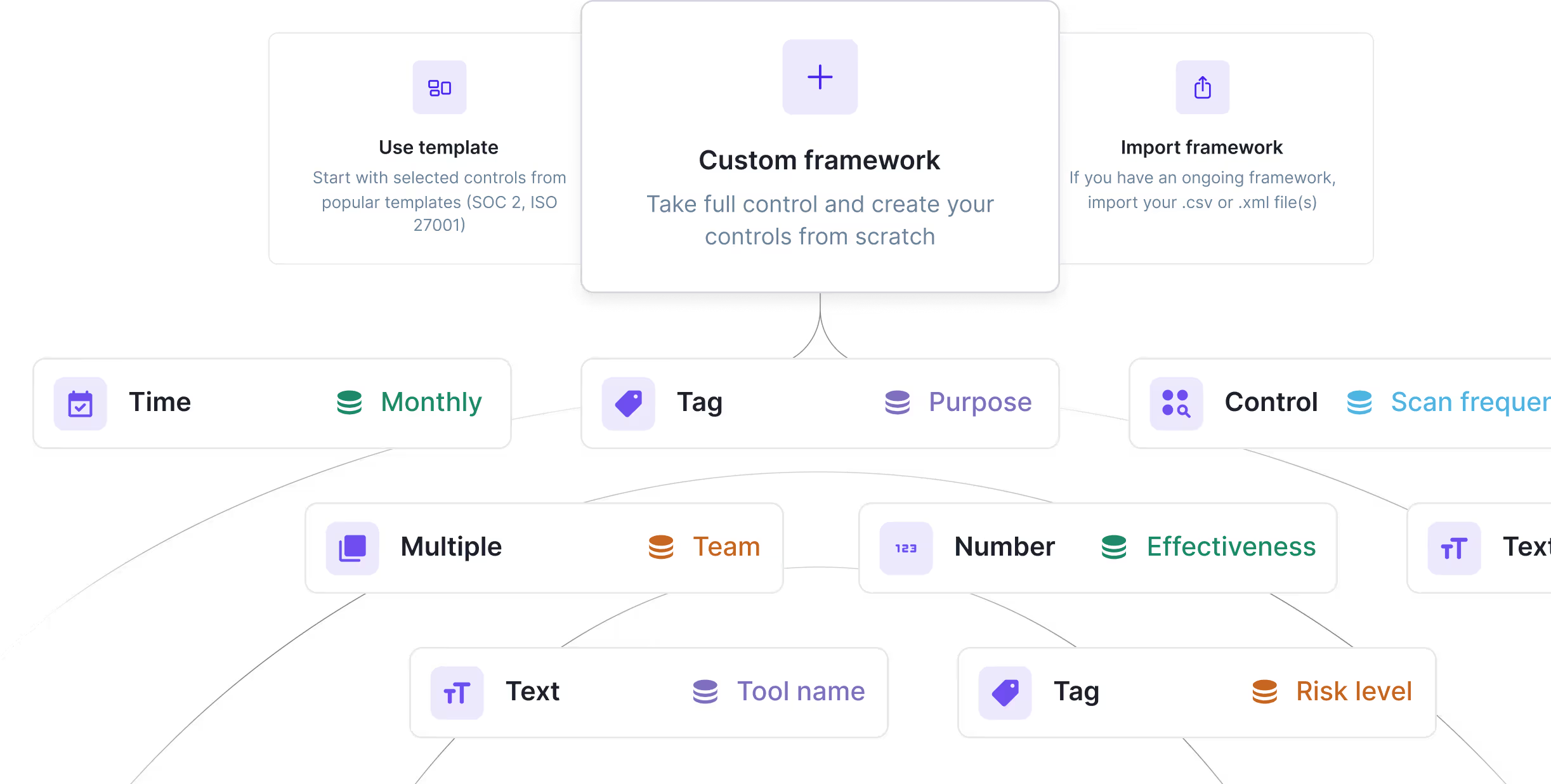
Complyance is designed for complex Enterprise environments that don’t fit into rigid systems. It adapts to any framework, workflow, or organisational structure, allowing teams to manage multiple standards such as ISO, NIST, SOC 2, and HIPAA within a single platform.




Lean GRC or Security teams at Enterprise companies, typically in healthcare, technology, or manufacturing. They manage real, multi-framework compliance programs, want to automate manual compliance work, and are either outgrowing a fast compliance tool, or stuck on a legacy platform that’s too rigid for their needs. The right fit for teams actively looking to use AI agents to reduce manual overhead and move faster.
Organizations where privacy and GDPR compliance is the primary driver, particularly those with large vendor ecosystems needing broad assessment coverage. Less suited to teams looking for automation across the full GRC workflow. The platform's manual-heavy approach means more time investment to operate, and some organizations find they need additional headcount to run it effectively at scale.
What we regularly hear from real customer's who have used their GRC solutions


Migrating to Complyance is simpler than you might think.