
GRC Problems, Solved: New Vendor Intake
One of the quieter problems facing TPRM teams right now is vendor intake. On paper it's the simplest step in the process: a business owner requests a new vendor, the team gathers what it needs, and the review begins. In practice, it's where reviews stall before they start.
The reason is that intake sits at an awkward boundary. The TPRM team needs complete information before it can begin a review, while the business owner needs a fast answer before they can move. Those two pressures pull in opposite directions, and intake is where they collide.
The pressure is only growing. New AI tools, SaaS additions, and suppliers are coming through faster than most teams anticipated, and intake processes built for lower volumes are now the choke point before every review can start. Each incomplete submission means a round of follow-ups, and every round is time the team isn't spending on the assessment itself. Multiply that across a growing vendor list and intake quietly becomes one of the biggest drags on the whole program.
There are a handful of ways teams tackle this, from fully manual to fully automated. None is wrong; they suit different teams at different stages. Here's how each one actually works, and where it holds up.
Option one: Requests received by email and chat
The most common starting point isn't a system at all. It's wherever the business already talks to the GRC team. A business owner emails to ask for a vendor review, or drops a note into a Slack or Teams thread, and the team picks it up from there. From the first message the reviewer is piecing the detail together themselves, asking what the vendor does, what data it touches, and who owns the relationship, then waiting on each answer before the next question makes sense. Teams often add a little structure to smooth this, a short note on the information a request should include, which nudges business owners toward sharing more before the questions start. Even so, the shape of the approach is the same: incoming requests, gathered and confirmed one message at a time, in the channels people already use.
Pros: The cost is effectively zero, with nothing to buy and nothing to build. Its bigger strength is that it meets business owners where they already work, asking nothing more than a message in a tool they have open anyway. The friction of intake stays with the GRC team, so there is no adoption hurdle and nothing new for the rest of the business to learn.
Cons: The trouble is the volume of manual work it generates. Every thin request turns into a thread of follow-ups and confirmations, and the reviewer carries all of it by hand. It also relies on completeness at the moment the business owner's incentive is speed, so urgent requests tend to arrive light, and there is nothing in an inbox or a chat thread to hold the line. As vendor numbers grow, the back-and-forth grows with them.
For a team with manageable volume, fielding requests as they come in costs nothing and keeps intake easy for the rest of the business. The price is paid in the team's own time, and it is a price that climbs steadily as the vendor list does.
Option two: A structured intake form in your existing ticketing stack
The next step up is to make the system enforce what an inbox or a chat thread can only ask for. Built into ServiceNow, Jira, or a custom workflow, an intake form can gate submission behind required fields and use conditional logic to send higher-risk vendors, those touching PHI, AI tooling, or financial data, to the right queue automatically. The shift is subtle but important: completeness stops being something you hope for and becomes something the form requires before the request can move.
Pros: It runs on tooling the organization already owns, so there is rarely new spend to justify, and a capable admin can usually stand up a working version in about a week. Most usefully, it closes off the thin submission at source, because a request cannot move forward until the required fields are filled.
Cons: A form can only act on what it's given, and it has no way to test that input against what the vendor actually does. Its routing logic is also fixed at build time, so it reflects the questions the team thought to ask rather than the ones a specific vendor raises. And once a record clears intake, a reviewer still has to qualify it, so the human workload climbs in step with vendor volume.
For teams that want enforcement without new budget, building intake into the existing stack is a genuine improvement on handling requests by hand. It works best where vendor types are fairly stable and the intake data is generally reliable, and it leaves the qualification work itself untouched.
Option three: An AI agent for intake parsing, classification, and follow-up
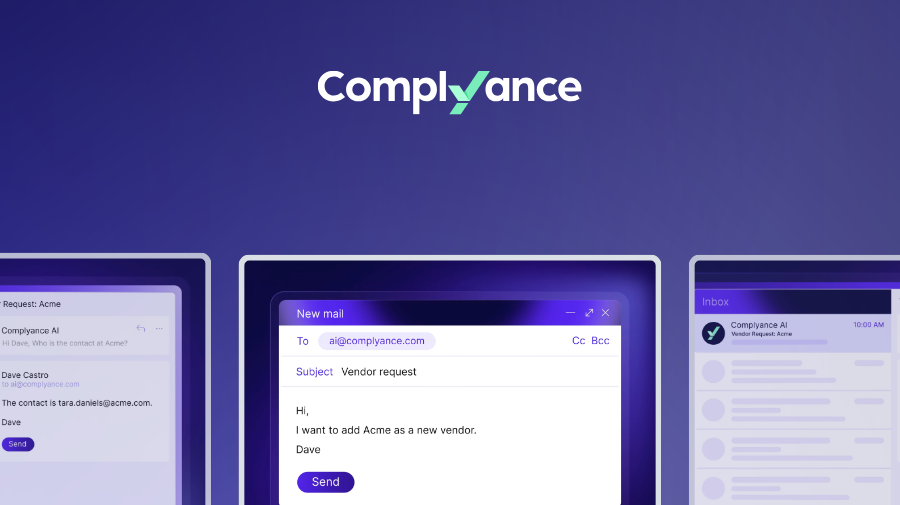
The third option takes a different route: it changes who does the intake work in the first place. A Vendor Intake Agent picks up each request the moment it arrives, reading the submission, creating the vendor record on receipt, and running a first-pass classification across the data accessed, the vendor category, and the risk indicators it can identify. Where something is missing, it goes back to the business owner itself, logs what comes in, and checks whether the same vendor has already been raised elsewhere. The team stays in control through the governance rules it sets, deciding what the agent can progress on its own and what it has to hand back for sign-off. By the time a reviewer opens the record, the qualifying and the chasing are already done.
Pros: Vendor records arrive created, complete, and pre-classified, with follow-ups and duplicate checks handled along the way, so intake quality no longer depends on how complete a request happens to arrive. Because the agent carries that load, the team can take on rising vendor volume without adding headcount, and business owners can ask it directly for a status update instead of routing the question through the team.
Cons: The work moves upfront, into governance. Someone has to define what the agent is allowed to progress and what needs a human decision, and those thresholds have to reflect the organization's actual risk appetite, which takes real thought to get right.
Of the three, this asks the most at setup, but it is a one-time investment rather than a recurring cost, and it is the only option that holds its shape as vendor numbers grow. It suits teams already feeling the strain, or those who can see it coming.
.png)
Which one is right for you?
The right starting point depends on where your team is today. If intake is a manageable nuisance and vendor volume is stable, handling requests as they come in, perhaps with a ticketing form on top, gives you enough structure without much overhead.
If you're already feeling the strain, or volume is climbing in a way that doesn't look like slowing, the manual options will need revisiting sooner rather than later. The governance investment in an intake agent is real, but it's a one-time cost; the cost of chasing incomplete intake is ongoing, and it compounds as the vendor list grows.
Intake isn't the most visible part of a TPRM program, but it's where every review either starts well or starts in a hole. Whichever option fits your team, the goal is the same: a complete, classified record waiting for the reviewer instead of a backlog of follow-ups.
See what the agent-led version looks like → Book a demo
Intake is the first problem in the TPRM sequence. Once a vendor is in the queue, the next question is what kind of assessment to run, and how to make that call consistently. That's where part two picks up. Part 2: Before You Can Assess a Vendor, You Have to Decide How



